
"Saint Anthony Industries"
5000 article(s) found

Introduction to the characteristics of Costa Rican Saint Roman Coffee Flavor Manor
All the coffee trees planted in Costa Rica are Arabica coffee trees. through improvement, the quality of coffee beans is better and more stable. in order to facilitate picking, coffee trees are kept at a height of about 2 meters through continuous pruning. The coffee that people eat is the taste of the seeds in the fruit that are brewed in water. After picking raw coffee beans, the peel, pulp, seed film and sun exposure must be removed.

Costa Rican Coffee with full grains and ideal acidity Coffee flavor and taste of Saint Roman Manor
The seven provinces are: Alajuela Alajuela (central, northwest of San Jose), Catago Cartago (central, east of San Jose), Guanacaster Guanacaste (northwest), Eredia Heredia (central, north of San Jose), Limon Limn (east, along the Caribbean), Pentalenas Puntarenas (west, along the Pacific Ocean), San Jose San

Introduction to the varieties of flavor and taste in the producing area of Costa Rican Saint Roman Coffee Manor.
The research center, located about 30 kilometers northeast of the Costa Rican capital San Jose, belongs to the Costa Rican Coffee Association and is a research institution for villa sarchi planting, breeding and quality inspection newly developed by Costa Rica's national coffee breeds. in addition, it also has 10 hectares of experimental plots, planting a number of excellent varieties. Coffee is the main agricultural product in Costa Rica, with an annual output of more than 2 million bags

Description of Coffee Flavor in Saint Roman Manor, Costa Rica introduction of fine coffee in producing areas
Other kinds of Brazilian coffee, such as Rio and Parana, can be produced in large quantities because they do not need too much care. Although the taste is rough, it is a kind of good and cheap coffee. It has its own standard because it is distributed all over the country and its solid quality varies. It has its own standard (NO.2~NO.8 according to the number of sundries, NO.13~NO.19 according to the size of beans, and six grades according to taste).

Introduction of Coffee Variety characteristics and Grinding degree in Saint Roman Manor, Costa Rica
The topography of Costa Rica is that the coast is surrounded by plains, while the middle is cut off by rugged mountains. The country declared 200 nautical miles in its exclusive economic zone and 12 nautical miles in its territorial sea. The climate belongs to the tropics and subtropics, and some of them are new tropics. Population [edited this paragraph] 4.27 million (2007). The official language is Spanish. 95% of the residents believe in Catholicism. In Costa Rica, only

Introduction to the flavor and taste of Costa Rica Saint Roman Coffee Manor with full grains and ideal acidity
Walk 20 minutes to the bus stop (there are more than N bus stops in San Jose, leaving in different directions). The bus leaves punctually at 5: 00 and arrives at Parlma at 11: 15. The Sierpe ship only leaves at 11:00 and 15 o'clock a day. I don't think I can catch the first boat at all. A taxi driver did me a favor. He called the boatman and told him that someone else was going to take the boat. And drive the car.
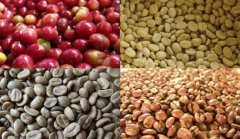
A brief introduction to the description of the flavor and aroma characteristics of Costa Rican Saint Roman Coffee
The research center, located about 30 kilometers northeast of the Costa Rican capital San Jose, belongs to the Costa Rican Coffee Association and is a research institution for villa sarchi planting, breeding and quality inspection newly developed by Costa Rica's national coffee breeds. in addition, it also has 10 hectares of experimental plots, planting a number of excellent varieties. Coffee is the main agricultural product in Costa Rica, with an annual output of more than 2 million bags
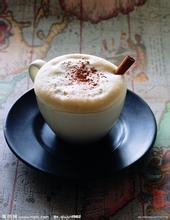
Description of Coffee Flavor in Saint Roman Manor, Costa Rica; introduction to the characteristics of fine coffee in producing areas
Costa Rica is located in the Central American isthmus, belonging to North America, 10 north latitude, 84 west longitude. It is bordered by the Caribbean Sea to the east and the North Pacific Ocean to the west, with a coastline of 1290 km (212km on the east coast and 1016 km on the west coast). Costa Rica borders Nicaragua in the north (309 km long border) and Panama (639 km long border) south-southeast. Total

Santa Rosa, Santa Rosa District, Guatemala | La Loma La Loma Chateau de Guadalon, Guatemala,
Professional coffee knowledge exchange more coffee bean information please follow the coffee workshop (Wechat official account cafe_style) Santa Rosa District, Guatemala Santa Rosa | Guadalong Manor La Loma La Loma washing Patch, Kaduai seed flavor? Santa Rosa in the Santa Rosa Mountains of Guatemala belongs to the district of Jolapa, not far from the capital Guatemala City, and can be visited on the same day.

Description of the flavor and taste of fine coffee beans in the coffee producing area of Saint Roman Manor, Costa Rica
Other kinds of Brazilian coffee, such as Rio and Parana, can be produced in large quantities because they do not need too much care. Although the taste is rough, it is a kind of good and cheap coffee. It has its own standard because it is distributed all over the country and its solid quality varies. It has its own standard (NO.2~NO.8 according to the number of sundries, NO.13~NO.19 according to the size of beans, and six grades according to taste).

Unique strong aroma of Costa Rican Saint Roman Manor Coffee Flavor and taste characteristics of boutique coffee
Costa Rica is one of the first countries in the Americas to establish a democratic system, and the idea of freedom and equality is deeply rooted. Costa Ricans love peace and oppose violence. As early as December 1, 1948, Costa Rica announced the abolition of the armed forces and the establishment of the National Guard, becoming the first country in the world without an army. [8] in 2007, there were 18000 police officers, which put an end to the possibility of soldiers interfering in politics.

Introduction to the Flavor of Coffee varieties in the Origin of Coffee in Saint Roman Manor, Costa Rica
All the coffee trees planted in Costa Rica are Arabica coffee trees. through improvement, the quality of coffee beans is better and more stable. in order to facilitate picking, coffee trees are kept at a height of about 2 meters through continuous pruning. The coffee that people eat is the taste of the seeds in the fruit that are brewed in water. After picking raw coffee beans, the peel, pulp, seed film and sun exposure must be removed.
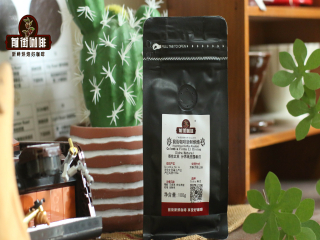
Introduction of beans, winner of wbc World Coffee Competition, Flavor characteristics of Sidra Coffee from Colombia
As a coffee lover, have you ever noticed a popular "minority" variety "Xizao" when you were in the village of beans recently? In this article, in front of the street, let's talk about the "minority" variety of Xizao and see what kind of story it has. The fame of Hope claw's "highlight moment" is largely due to its generation.

Introduction to the characteristics of coffee flavor and taste of Costa Rica's Saint Roman Manor
The topography of Costa Rica is that the coast is surrounded by plains, while the middle is cut off by rugged mountains. The country declared 200 nautical miles in its exclusive economic zone and 12 nautical miles in its territorial sea. The climate belongs to the tropics and subtropics, and some of them are new tropics. [3] the climate of Costa Rica is so different that it completely subverts the classification of the four seasons of the year. There are only two seasons, April to December.

Introduction of boutique coffee beans in coffee flavor and taste areas of Chateau Saint Roman, Costa Rica
1502 C. Columbus discovered the coast of Costa Rica on his fourth voyage. Since then, the Spanish colonists have invaded many times. The city of Catago was founded in 1563 and Costa Rica was colonized by Spain and placed under the jurisdiction of the Governor's Office of Guatemala. During the colonial period, under the cruel enslavement and oppression of the Spanish colonists, the Indians were almost wiped out and there was little labor available for enslavement.

Introduction to the flavor and taste characteristics of Saint Roman Coffee Manor in Costa Rica
The seven provinces are: Alajuela Alajuela (central, northwest of San Jose), Catago Cartago (central, east of San Jose), Guanacaster Guanacaste (northwest), Eredia Heredia (central, north of San Jose), Limon Limn (east, along the Caribbean), Pentalenas Puntarenas (west, along the Pacific Ocean), San Jose San

Japanese style Hari Cafe Haru Cafe
The coffee shop shows up only once every two or three months and has only appeared four times since October last year. When it opened for business last month, most of the waiters in the store were young foreigners wearing Japanese bathrobes to entertain customers. What kind of coffee shop is this?
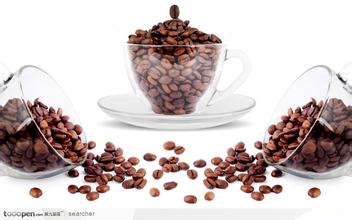
Introduction to the processing methods of Fine Coffee in Chateau Saint-Roman, Costa Rica
There are many kinds of coffee here, but its industrial policy is large and cheap, so there is not much premium coffee, but it is a good choice for mixing other coffees. One of the most famous is Mountain Costa Rica Coffee, which tastes mellow and neutral. It can be boiled directly or mixed with other kinds of coffee beans to form a mixed coffee. It is also a good choice. Other kinds of Brazil

Costa Rican Coffee beans with the Royal Manor of Saint Roman
The coffee beans produced at the high latitudes of Costa Rica are famous in the world, full-bodied, mild in taste, but extremely sour. The coffee beans here have been carefully processed, which is why they have high quality coffee. Located in the south of SanJos, the capital of Tarasu, Costa Rica is one of the most valued coffee growers in the country. Tarasu in Costa Rica (
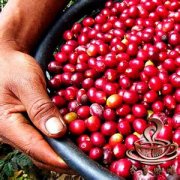
A brief introduction to the characteristics of coffee grindability and taste in Chateau Saint-Roman, Costa Rica
The research center, located about 30 kilometers northeast of San Jose, the capital of Costa Rica, belongs to the Costa Rican Coffee Association and is a research institution for coffee planting, breeding and quality inspection in Costa rica. in addition, it also has 10 hectares of experimental plots, planting a number of excellent varieties. Coffee is the main agricultural product of Costa Rica, with an annual output of more than 2 million bags (60 kg).